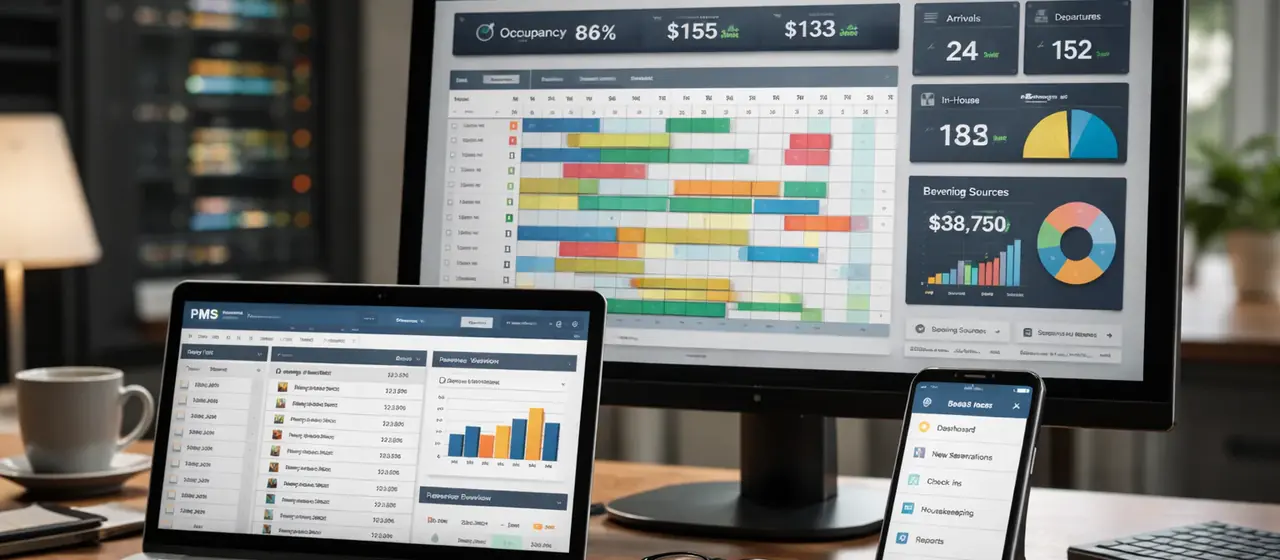
სასტუმროს შემოსავლების მართვის სისტემა ეკრანზე — დატვირთვა, ADR, RevPAR
Home/Services/Revenue management
Stage 6 — Operations

Revenue management

Chasing occupancy by discounting is the most common and most expensive mistake.

The longest stage — it runs for years. All services →

A full hotel is not a profitable hotel. Occupancy rises easily when you cut the rate — but revenue per available room falls, and profit with it.

Revenue management balances three variables at once: rate, channel and the seasonality of demand.

What it covers

Pricing

  • Dynamic pricing and package structure
  • Demand forecasting and a seasonal calendar

Channel management

  • Channel management and commission optimisation
  • Growing the share of direct bookings
  • Competitor rate monitoring

Control and reporting

  • Daily control of ADRAverage Daily Rate — room revenue divided by the number of rooms sold., occupancy and RevPARRevenue per Available Room — occupancy multiplied by average rate; it measures rate and occupancy together.
  • Group and corporate rate policy

You do not pay a commission to a channel — you pay it to win a booking

Booking and Expedia bring the reservation and take 15–20 percent for it. That is not a bad deal while the alternative is an empty room.

It becomes bad when the share of direct bookings is small and the hotel depends entirely on the channel. Our job is to grow that share.

Frequently asked questions

What is RevPARRevenue per Available Room — occupancy multiplied by average rate; it measures rate and occupancy together. and why does it matter?
RevPARRevenue per Available Room — occupancy multiplied by average rate; it measures rate and occupancy together. is revenue per available room — occupancy multiplied by average rate. It is the one figure that looks at both together: 90% occupancy at a low rate and 60% at a high rate can yield the same revenue, while the first costs far more to service.
Occupancy is good but profit is not — why?
Usually one of three: the rate is too low, too many bookings come through high-commission channels, or the occupancy adds more cost than profit. That is exactly why we look at RevPARRevenue per Available Room — occupancy multiplied by average rate; it measures rate and occupancy together. rather than occupancy.
How do we reduce commission to Booking.com?
Not by refusing the OTAs but by strengthening the direct channel: a fast, mobile-ready website, a booking engine with card payment, rate parity, and a small advantage for booking direct. The OTAOnline Travel Agency — booking platforms such as Booking.com and Expedia, which bring bookings for a commission. gives visibility — you use it, but not as your only channel.
What share of direct bookings is good?
In the Georgian market 25–35% is a healthy figure for a city hotel. At resorts with returning guests it can exceed 45%. Below 10% means the website or the booking engine is not working.
How often do you change the rate?
The rate is reviewed daily and changed when needed — for events, weather, competitor pricing and booking pace. That does not mean changing it every day; it means the decision is made with current information every day.
Can we take revenue management alone, without full management?
Yes. It is a separate service and with an operating hotel we often start exactly there. Results usually show within three to four months, because part of the bookings are already on the books and changes take time to appear.

Occupancy looks fine but profit is lower than expected?

Write or call. We will look at the project, tell you what information we need and how soon you will have an answer. The first conversation is free.

+995 322 560 565Or write to usMonday to Friday, 10:00–19:00